-
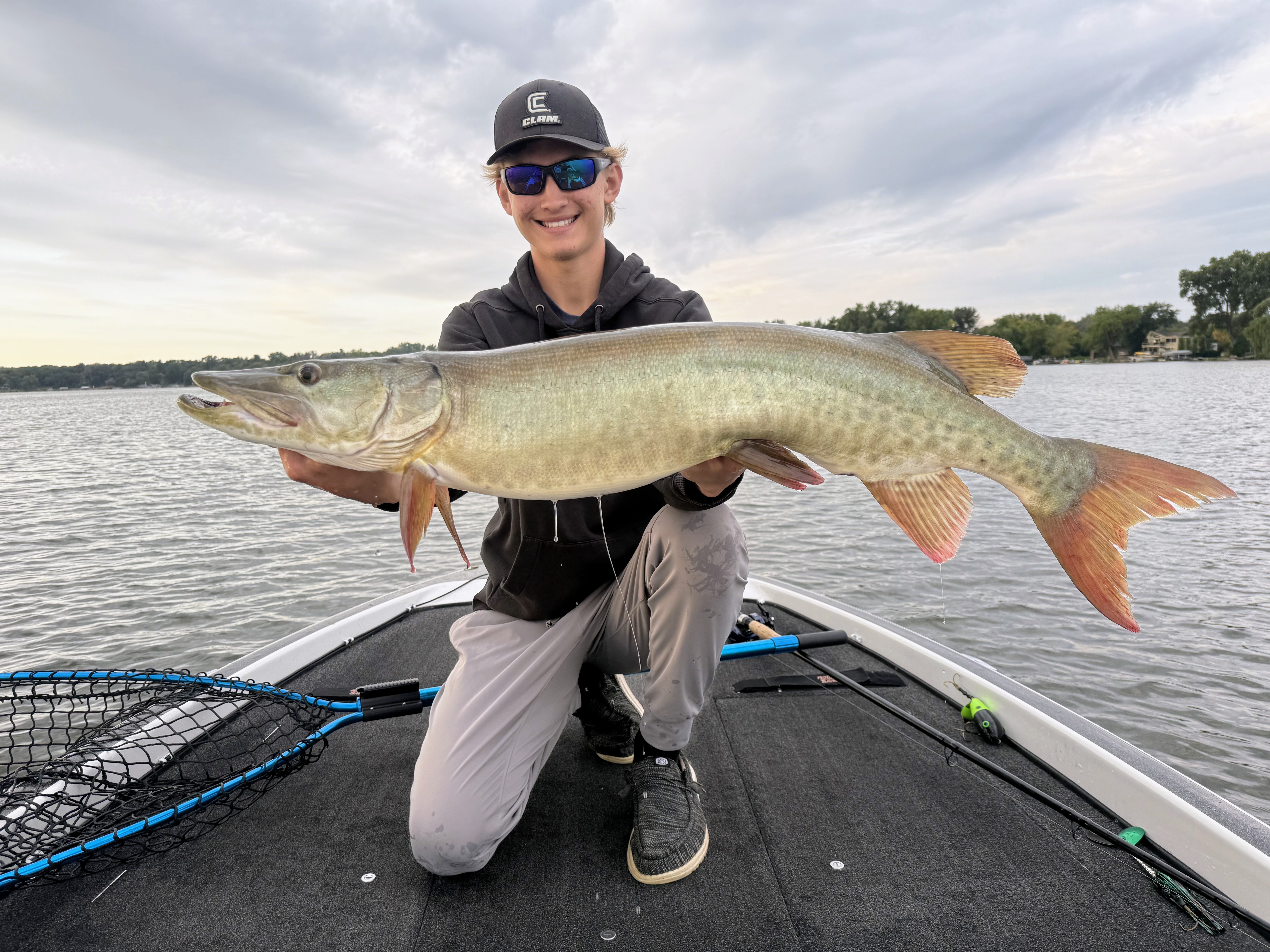
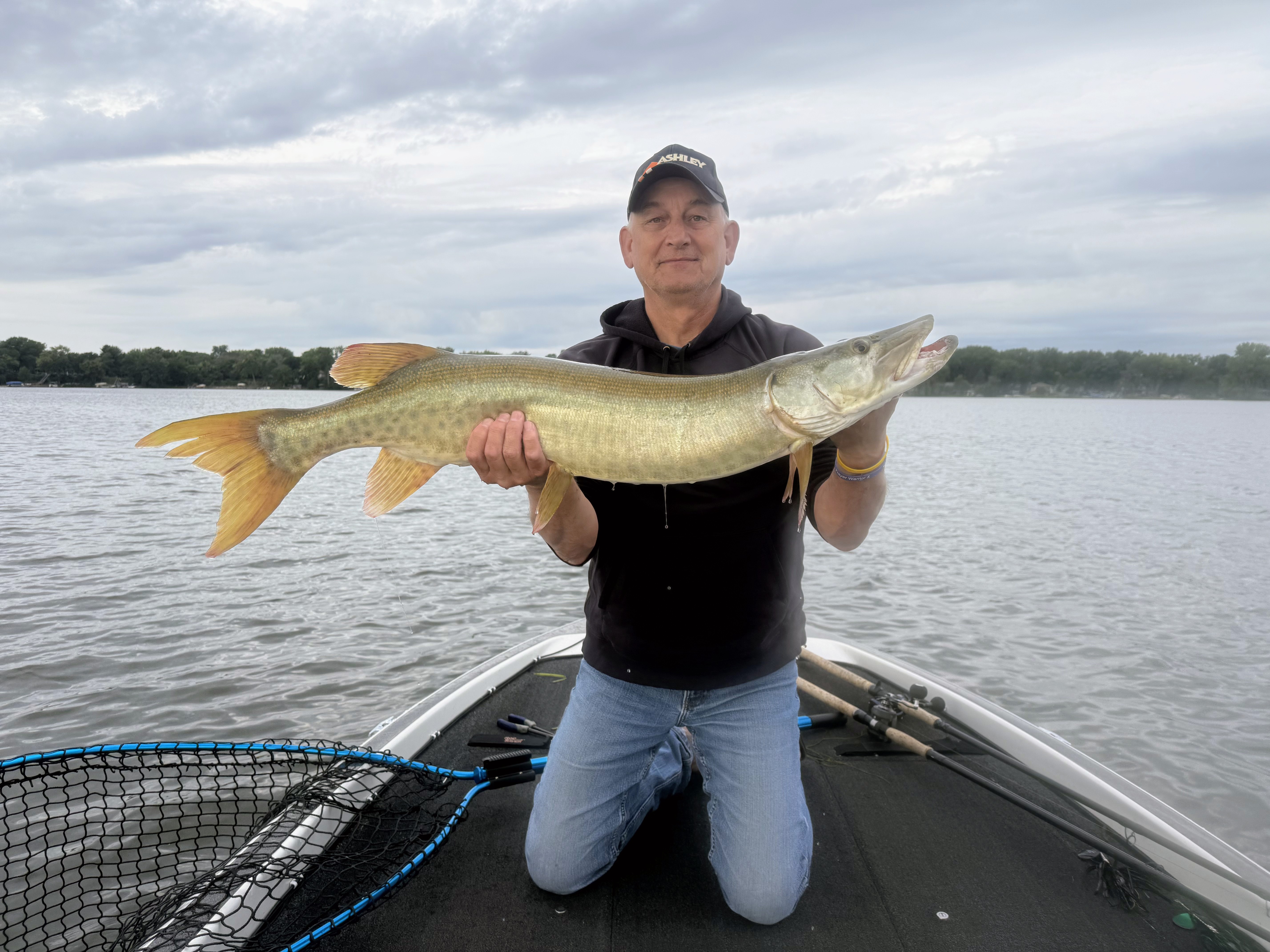
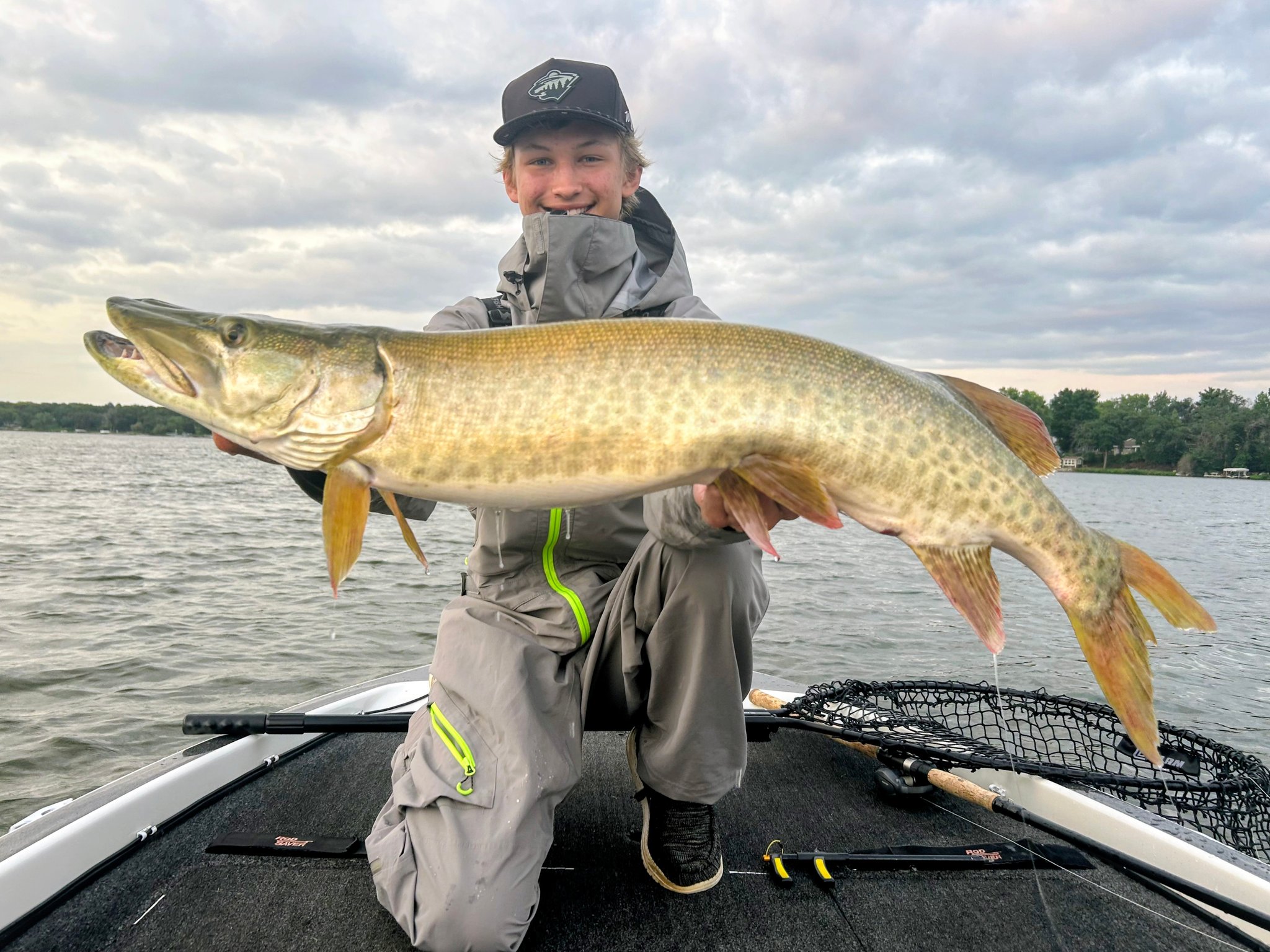
Late September Minnesota musky fishing is heating up as water temperatures settle around 63 degrees and muskies continue to move into predictable shallow-water areas. This is one of the most exciting times of the season to get on the water for a Minnesota musky fishing trip.
Shallow Bucktail Musky Fishing Is Producing
The shallow-water bite has been consistent, with bucktails producing muskies in shallow water around predictable locations. Weed edges, shallow flats, and areas holding baitfish are continuing to be important areas to check.
At this point in the fall, location is becoming increasingly predictable. The challenge isn't necessarily finding shallow water — it's identifying which shallow areas are holding fish and being there when those muskies are ready to feed.
For anglers targeting Twin Cities muskies, this late-September pattern provides some excellent opportunities to target active fish without necessarily having to fish extremely deep.
Low Barometric Pressure Is Key
Weather conditions are becoming increasingly important as we move deeper into fall. Low barometric pressure has been a key factor in the late-September musky bite, with muskies showing increased activity when favorable weather conditions line up.
These changing fall conditions can create short but highly productive feeding windows. Paying attention to approaching weather systems, wind direction, and barometric pressure can help determine when to spend time targeting shallow muskies.
Moon Times Are Playing an Important Role
Moon activity is also becoming an important piece of the puzzle. Moon times can help identify the most productive feeding windows, especially when they overlap with favorable weather and low-pressure conditions.
For serious Minnesota musky anglers, combining moon times, weather conditions, water temperature, and location can help narrow down the periods when muskies are most likely to become active.
Late September Is Prime Time for Minnesota Muskies
With water temperatures around 63 degrees, active shallow-water fish, and bucktails producing, the late-September musky bite in Minnesota is setting up well.
If you've been waiting for fall conditions to target a big Minnesota musky, this is the time to get on the water.
Musky Geek Guide Service offers guided musky fishing trips in the Twin Cities and surrounding Minnesota waters. Whether you're an experienced musky angler looking for another opportunity at a trophy fish or you're looking to catch your first musky, late September provides an excellent opportunity to experience the fall musky bite.
Book Your Minnesota Musky Guide Trip with Musky Geek Guide Service and get on the water while the shallow-water fall bite is happening.
-
How to Catch Muskies on Pressured Metro Lakes
Mar 19, 2026
How to Catch More Muskies on the Pressured Lakes of the Minneapolis Metro
Catching muskies on the heavily pressured lakes of the Minneapolis–St. Paul metro is a completely different game than fishing remote northern waters. These fish see thousands of casts every season, countless boats overhead, and nearly every popular lure made. Yet despite the pressure, metro lakes continue to produce quality muskies for anglers who adjust their approach.
This guide breaks down how to consistently catch more muskies on pressured metro-area lakes by focusing on strategy, efficiency, and subtle advantages that most anglers overlook.
Why Metro Musky Lakes Fish Differently
Metro-area musky lakes experience:
- High boat traffic
- Heavy fishing pressure from opener to fall
- Frequent catch-and-release encounters
- Repetitive lure exposure
As a result, these muskies are not uncatchable—but they are educated. They tend to follow more, strike less impulsively, and punish mistakes at boatside.
Success comes from refining details rather than fishing harder.
Fish Where Others Don’t (Not Just What Looks Good)
On pressured lakes, the most obvious spots are often the most overfished.
Instead of camping on community spots, focus on:
- Subtle inside turns on weed edges
- Small hard-bottom patches within weeds
- Short secondary points most anglers pass by
- Transitions that don’t show clearly on maps
Metro muskies often relate to minor changes rather than classic textbook structure. Spending time graphing and exploring pays bigger dividends here than on less pressured systems.
Time Your Fishing, Not Just Your Location
On busy metro lakes, timing matters more than spot selection.
Key windows include:
- Early morning before recreational traffic
- Short feeding windows during weather changes
- Evenings when boat traffic decreases
- Midday during unstable weather when others leave
Many metro muskies are caught when pressure drops—not necessarily when conditions are “perfect.”
Downsize Smart, Not Soft
Downsizing doesn’t mean fishing timidly—it means being intentional.
Effective pressured-lake adjustments include:
- Smaller bucktails with higher speed
- Compact rubber baits instead of magnum plastics
- Glide baits with tight, controlled action
- Topwaters with subtle sound profiles
These baits still trigger reaction strikes but don’t overwhelm fish that have seen oversized presentations all season.
Clean Boatside Execution Is Critical
Pressured muskies are notorious for following lures all the way to the boat. Boatside success often determines whether you catch fish or just see them.
Key boatside principles:
- Start the figure-8 early
- Maintain speed—don’t slow down
- Use wide, smooth turns
- Match the fish’s attitude, not your nerves
On metro lakes, many muskies are caught on the second or third turn, not the first. Confidence and discipline at boatside matter more here than anywhere else.
Refine Gear for Efficiency and Control
Small gear tweaks can create meaningful advantages on pressured water.
Consider:
- Sharpening hooks more frequently
- Using shorter leaders for better lure action
- Fresh line for improved hooksets
- Quiet boat control and clean trolling motor usage
Metro muskies don’t tolerate sloppy presentations. Clean, controlled fishing consistently outperforms brute-force tactics.
Rotate Lures and Angles Frequently
Showing a fish something slightly different is often enough.
Instead of cycling through dozens of baits, try:
- Changing retrieve angles
- Adjusting speed before switching lures
- Re-visiting spots later with a different presentation
- Fishing the same structure deeper or shallower
Small variations trigger fish that ignore repetitive patterns.
Why a Guide Advantage Matters on Metro Lakes
Pressured lakes reward anglers who understand fish behavior, timing, and efficiency. That’s why many anglers turn to experienced guides on metro waters.
A guide brings:
- Intimate knowledge of subtle structure
- Daily pressure and movement awareness
- Real-time adjustments based on fish behavior
- Boatside coaching that converts follows
On metro lakes, guidance often shortens the learning curve by years.
Final Thoughts on Metro Musky Fishing
The Minneapolis metro area offers outstanding musky fishing—but only for anglers willing to adapt. These fish demand precision, patience, and attention to detail. By fishing smarter, timing your efforts, and executing clean presentations, you can consistently catch muskies even on the most pressured waters.
Metro muskies aren’t easier—but they’re absolutely beatable.🎣
-
Common Musky Fishing Mistakes Anglers Make
Mar 11, 2026
Common Musky Fishing Mistakes Anglers Make (And How to Avoid Them)
Musky fishing is one of the most challenging and rewarding pursuits in freshwater angling. Known as the “fish of 10,000 casts,” muskies demand patience, precision, and a solid understanding of their behavior. Unfortunately, many anglers—both beginners and experienced fishermen—unknowingly make mistakes that drastically reduce their chances of success. As a professional musky fishing guide, I see the same issues come up again and again. In this guide, we’ll break down the most common musky fishing mistakes anglers make and explain how correcting them can immediately improve your results on the water.
1. Fishing Too Fast (Or Too Slow)
One of the biggest musky fishing mistakes is assuming there’s a single “correct” retrieve speed. Muskies are moody predators, and their activity level can change by the hour.
Common mistake:
Anglers stick with one retrieve speed all day, even when fish aren’t reacting.How to fix it:
Vary your retrieve speed until fish show interest. Some days muskies want a fast, erratic presentation; other days they prefer a slow, methodical approach. Pay attention to water temperature, weather conditions, and fish follows to dial in what works.2. Ignoring Prime Structure and Location
Muskies are ambush predators that rely heavily on structure. Casting randomly across open water is a low-percentage approach.
Common mistake:
Fishing everywhere instead of fishing where muskies actually live.How to fix it:
Focus on high-percentage areas like:- Weed edges
- Rock bars
- Points and saddles
- Drop-offs and transitions
- Current breaks
Understanding seasonal musky movements is critical. A musky fishing guide can shorten this learning curve dramatically by showing you where fish set up throughout the year.
3. Not Committing to the Figure Eight
Many muskies are lost—or never caught—boatside.
Common mistake:
Pulling the lure out of the water too early or doing a lazy figure eight.How to fix it:
Every cast should end with a proper figure eight, especially if you’ve had follows during the day. Keep your rod tip down, make wide turns, and change speeds during the maneuver. A surprising number of muskies strike right at the boat.4. Using the Wrong Gear for Musky Fishing
Musky fishing isn’t bass fishing on steroids—it’s its own game.
Common mistake:
Using rods, reels, and line that are underpowered for musky-sized lures and fish.How to fix it:
Make sure you’re using:- Medium Heavy or Extra-heavy Tackle Industries musky rods. (Use discount code muskygeek15 )
- High-capacity baitcasting reels
- 80–100 lb braided line
- Quality leaders rated for musky teeth
Proper gear improves hook-sets, reduces fatigue, and significantly increases landing success.
5. Poor Lure Selection (Too Much or Too Little Variety)
Having the wrong lures—or too many without a plan—can hurt more than help.
Common mistake:
Throwing the same lure all day or constantly switching without learning what fish respond to.How to fix it:
Carry a balanced selection of:- Bucktails
- Glide baits
- Jerkbaits
- Crankbaits
- Topwater lures
- Rubber baits
Pay attention to what produces follows or strikes, then refine your approach. Musky fishing success often comes from making small adjustments, not wholesale changes.
6. Fishing Only During “Comfortable” Conditions
Some of the best musky fishing happens when conditions are less than ideal.
Common mistake:
Avoiding wind, clouds, cold fronts, or rain.How to fix it:
Muskies often feed aggressively during weather changes. Wind can stack baitfish, and overcast skies can extend feeding windows. Learning how conditions affect musky behavior separates average anglers from successful ones.7. Lack of Patience and Mental Focus
Musky fishing is mentally demanding. Losing focus for even a few casts can cost you the fish of a lifetime.
Common mistake:
Getting frustrated, rushing casts, or mentally checking out after slow periods.How to fix it:
Stay locked in. Muskies often appear when you least expect them. Confidence, consistency, and focus are key—especially late in the day when big fish often show up.8. Not Learning From a Musky Fishing Guide
This might be the most overlooked mistake of all.
Common mistake:
Trying to learn everything through trial and error alone.How to fix it:
Fishing with a professional musky guide accelerates learning faster than years of solo fishing. You’ll gain insight into:- Seasonal patterns
- Productive locations
- Proper lure presentation
- Boat positioning
- Fish handling and release
Even experienced anglers benefit from guided trips by picking up subtle techniques that lead to more consistent success.
Final Thoughts: Avoid the Mistakes, Catch More Muskies
Musky fishing is hard—but it doesn’t have to be frustrating. By avoiding these common musky fishing mistakes and making smarter decisions on the water, you’ll dramatically increase your odds of success.
If you’re serious about catching more muskies and shortening the learning curve, fishing with a knowledgeable guide can make all the difference. Whether you’re new to musky fishing or looking to level up your skills, the right guidance turns missed opportunities into unforgettable catches.
Ready to put these tips into action? Book a guided musky fishing trip and start fishing smarter, not harder.
Lack of planning
Soft CTA: “Guided trips eliminate these mistakes.”
-
Minnesota Musky Lake Study: How to Find Musky Spots Before the Season Starts
Successful musky fishing in Minnesota doesn’t start on opening day—it starts months earlier. While the lakes are still frozen, experienced musky guides are already breaking down maps, reviewing past data, and identifying high-percentage areas long before the first cast of the season.
This preseason lake study process is one of the biggest differences between anglers who hope to find muskies and those who consistently contact them. In this article, we’ll break down how Minnesota musky guides study lakes before the season starts, what to look for, and how this preparation leads to more fish once the ice is gone.
Why Preseason Lake Study Is Critical for Minnesota Musky Fishing
Minnesota’s musky season is limited, and early-season opportunities can be some of the best of the year. Fish are often shallow, predictable, and concentrated—but only if you know where to look.
Preseason lake study allows you to:
- Eliminate unproductive water before the season begins
- Build a milk run of high-percentage spots
- Fish with confidence instead of guessing
- Capitalize on early-season patterns immediately
- Guides rely on this process so clients aren’t “donating casts” during prime windows.
- Start With High-Quality Lake Maps and GPS Data
The foundation of musky lake study begins with detailed mapping.
Focus on:
- Contour maps with tight depth changes
- Side-scan and sonar history (if available)
- Marked weed edges and basins
- Known forage zones
Modern digital maps make it easy to identify structure, but the key is understanding why certain features attract muskies—not just where they are.
Identify Spawning Areas and Early-Season Movement Routes
In Minnesota, musky behavior early in the season is closely tied to spawning and recovery.
During winter lake study, identify:
- Shallow bays with dark bottoms
- Protected areas with minimal current
- Nearby access to deeper water
- Subtle channels leading out of spawning zones
These areas often serve as early-season feeding and staging locations once water temperatures rise.
Break Down Weed Growth Potential Before Ice-Out
Weeds are one of the most important factors in musky location, especially on Minnesota lakes.
Before the season:
- Look for flats that historically grow early weeds
- Identify inside turns and fingers on weed edges
- Note hard-bottom areas mixed with vegetation
Understanding where weeds will grow is just as important as knowing where they were last year.
Focus on Transitions, Not Just Structure
Pressured Minnesota muskies often relate to subtle changes rather than obvious spots.
Key transitions to mark during lake study:
- Weed-to-rock changes
- Sand-to-muck edges
- Hard-bottom patches within weeds
- Depth changes that don’t show clearly on maps
These areas are easy to overlook but frequently hold fish—especially once pressure increases.
Build a Seasonal Milk Run Before the Opener
Don’t wait until opening day to decide where to fish.
During winter:
- Mark primary and secondary spots
- Group locations by season and conditions
- Plan rotation routes to avoid burning spots
This preparation allows efficient decision-making once on the water—adjusting based on weather, pressure, and fish behavior.
Use Past Success (and Failure) as Data
One of the most valuable lake study tools is your own experience.
Ask yourself:
- Where did fish show up early last season?
- Which spots produced follows but no strikes?
- Where did fish appear later than expected?
Keep mental—or written—records that help refine future plans. Every follow is a clue.
Why Guides Have an Early-Season Advantage
When clients step into a guide’s boat, the plan is already built.
A guide brings:
- Preseason research and spot selection
- Understanding of seasonal fish movement
- Confidence in where fish should be
- Efficient use of limited fishing time
This is why guided trips often produce fish early in the season while others are still searching.
Final Thoughts: Preparation Finds Muskies Before the Season Starts
Musky lake study isn’t about memorizing spots—it’s about understanding fish movement, structure, and seasonal behavior. In Minnesota, where time and opportunities are limited, preseason preparation is one of the most powerful tools an angler can use.
The more work you put in before the ice goes out, the fewer casts you waste once the season begins—and the more muskies you’ll contact throughout the year.
-
Fall Transition
Sep 11, 2025
We are approaching the fall transition time where the days are shorter and the water tempuratures are on the downward trend. This time of year is always some of the best fishing of the whole year for me, especially when we're talking about consistent action, and a lot of action. The fish are migrating to shallow sand and shallow weed flats, making this prime topwater and bucktail season. We just came off an extreme cold front where the water temp dropped 7 degrees in the matter of 2 days, which really shut the fishes mood down. after the initial cold front passed and things start to stabilize, we're finding an active fish or two per trip. With warmer temps in the forecast, I look for the fish to bounce back and get active again. Over the next few days fishing should balance out and pick up.